Paradise
November 2025
MEDICAL DRAMA
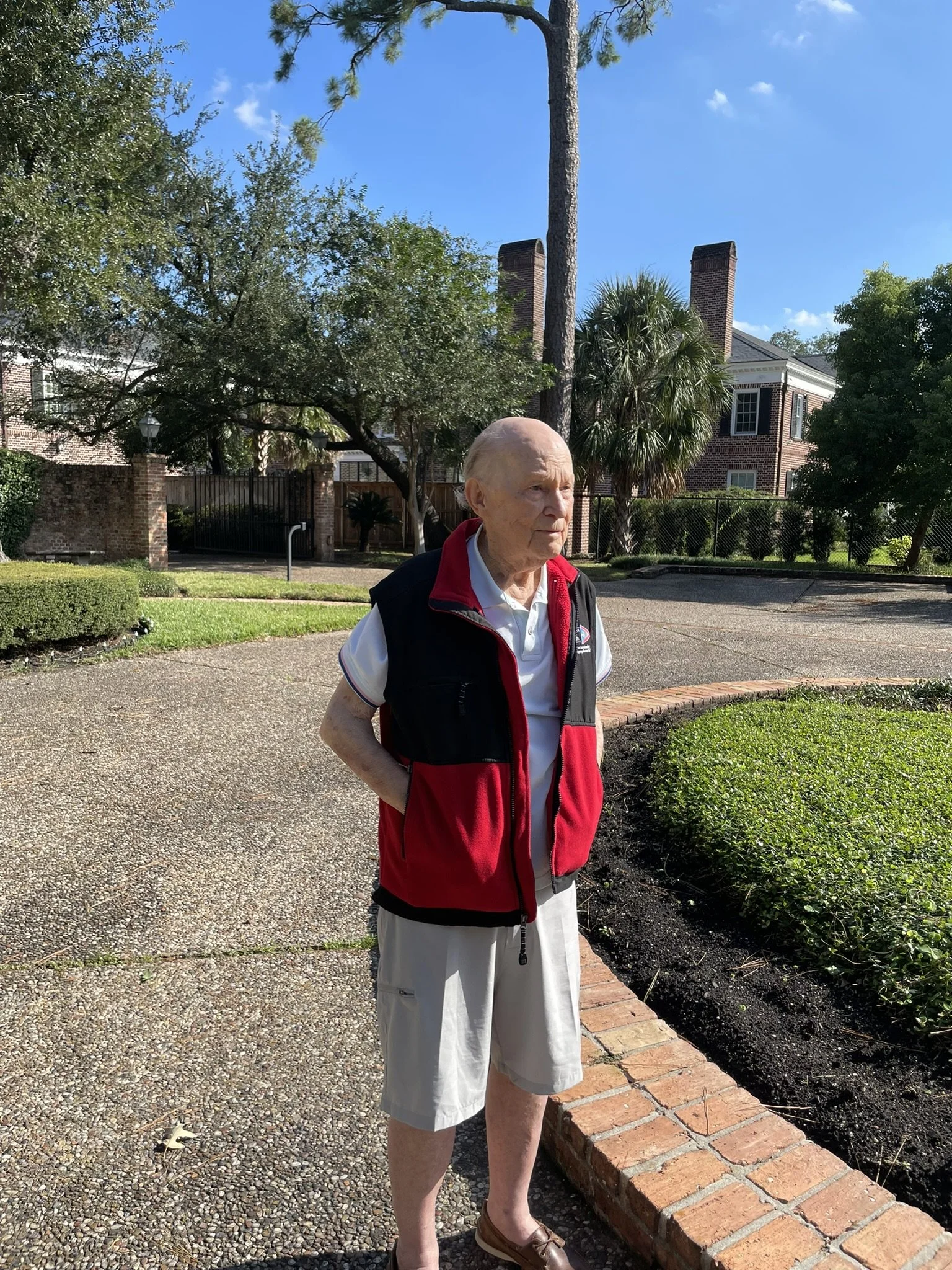
At the end of August in 2025, I flew to Houston, Texas, feeling not so well and short of breath. After a brief visit, my doctor friend Mike Mann checked me into Memorial Hermann Hospital. Fluid (42 ounces) was removed from my lungs to start the beginning of a long, long stay.
Pneumonia—the disease was taking over my chest. Near constant intravenous injections of vancomycin, the most powerful antibiotic, were losing to the disease. I lapsed into a constantly painful fog, miserable every moment. Life in this state of pain had no appeal.
PARADISE
The velvety blood-red pashmina cape draped softly, warmly, cozily, comfortably over my shoulders and naked body. I was perfectly shaved with perfumed lotion on my face and body, my manicure and pedicure were flawless, my teeth were smilingly clean, the whisps of my thin hair neatly coiffed, my body fresh from a steam bath and soft shower, relaxed from a light massage. The most beautiful soft music ever heard filled all. The air was perfumed, scented with the aroma of thousands of flowers as I slowly walked barefooted on the warm solid gold walkway. Just ahead on the golden path, luminescent pearly gates were inviting. Voluptuous siren-like angels softly sang my name, arms open, beckoning and welcoming me. I was at peace, completely relaxed.
In the real world, my blood pressure was 60 over 40 and falling. Inexplicably, I stopped walking, slowly turned around and walked back to LIFE!
MRSA
MRSA is short for methicillin-resistant staphylococcus aureus. The contagious bacterial infection is strong and resilient, able to withstand conventional antibiotics (such as penicillin, methicillin, amoxicillin and oxacillin). The end result can be and often is fatal.
Pneumonia is an infection of the lungs. Statistics show that hospitals are the leading cause of staph infections. Mortality from MRSA pneumonia exceeded 90% in the pre-antibiotic era. Mortality now ranges from 40% to 75% or greater in patients of advanced age and those with heart impairment. Intravenous vancomycin is the drug of choice for MRSA. Treatment may range beyond 14 days depending on the extent of the infection and response to the treatment.
For a patient under general anesthesia, bronchoscopy is a procedure to look directly at the airways in the lungs using a thin, lighted tube. A tube in the mouth is moved down the throat and windpipe into the airways. I underwent the procedure once for each lung, both were flooded with fluid, and one was collapsed.
At Memorial Hermann Hospital, I was assigned to an extra-cost luxury suite. The spacious private room with connected parlors had a dining table, couches convertible to beds, big-screen television and comfortable chairs. The rooms had expansive large windows with comforting views and more than ample sunlight.
Aside from the hospital bed in the alcove, the area was a luxury hotel room. The hospital bed was a modern miracle. Nurses hinted that it cost nearly $50,000. The bed was self-propelled and infinitely adjustable. It was almost comfortable if you could sleep only on your back.
My life became a fog-bound misery. Electrodes pasted to my chest recorded 24/7 information on my heart, including blood pressure. A catheter in my arm allowed nurses to collect blood anytime. Occasionally it was clogged, so a new injection was needed. I felt like a pincushion. Intravenous antibiotics were administered at least three times around the clock for about an hour and half each session. The distinctive, powerful and unpleasant odor of the vancomycin will linger in my mind forever. The smell enveloped my body and affected my urine, waste, perspiration and probably my breath. I lay flat on my back, captive to sickness.
Fox News on TV was of little comfort. My appetite was non-existent. As noted by my cardiologist Dr. Rosales, I had been a watermelon filled with salt water! My weight plummeted from about 162 to 127 pounds as registered on the elaborate hospital bed.
My sweet darling wife Iris visited me a couple of times daily, despite the huge inconvenience of driving across Houston in heavy traffic and encountering persistent parking problems. She brought cheer to a bleak situation. My darling daughter Emmalee sent a beautiful batch of flowers that added color and a pleasant aroma to the area of sickness.
The doctors were close mouthed about my status. Only after the fact did they admit that I was close to dying. Of course, I was well aware of the situation. I discussed with the attending doctor the procedure for stopping the endless therapy and unplugging. He said that all that was needed was my consent. Then I would be put on painkilling drugs and moved to a different location. At the time this seemed like a logical way to escape the suffering.
Dr Rosales and Iris convinced me to "walk away from the golden gates and live . . . ."
November 2025 With home health worker.
Looking back, this is a decision I am so happy I made.
November 2025
Newer