Mexican Taxi
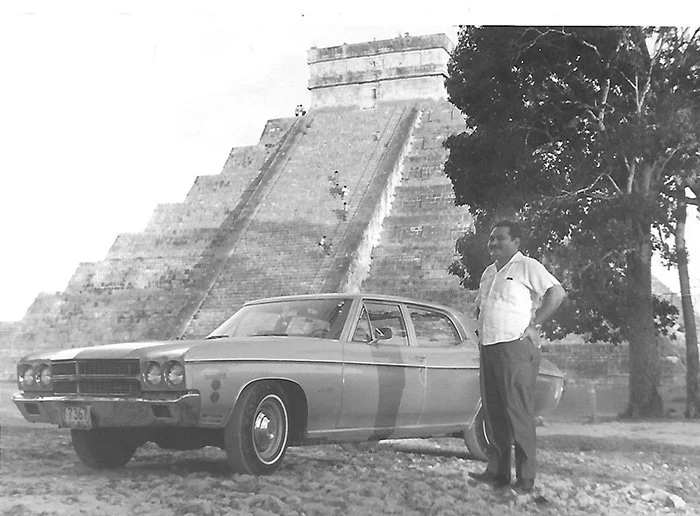
A brass sun was low in the hazy afternoon sky and the temperature was beyond hot. Along a two-lane highway shimmering with heat waves, a shiny automobile was moving at modest speed.
The car pulled into a stand-alone gas station, passed by the gas pumps and pulled over and stopped by the side of the building. Out hopped a lanky man, shirt tail out and hastened inside, leaving the car engine running. From the shadows stepped another man, who by his appearance seemed to be a Mexican. He opened the car door, entered and slowly drove on to the road. My adventure had begun!
Like many in my family, I was born in Michigan in the year of 1962. While we shared some DNA, most of us had unique characteristics. My coloring was strange; my “magic mirror acrylic paint” was two-tone, gray and sea green. My name was the same as the others: “Bel Air Chevrolet.” The manufacturer was proud of my squared-off styling and smooth new shape. The advertisements in magazines said “Room, Zoom, and a Road Softening Ride”. . . the 50th Anniversary Model Chevrolet.
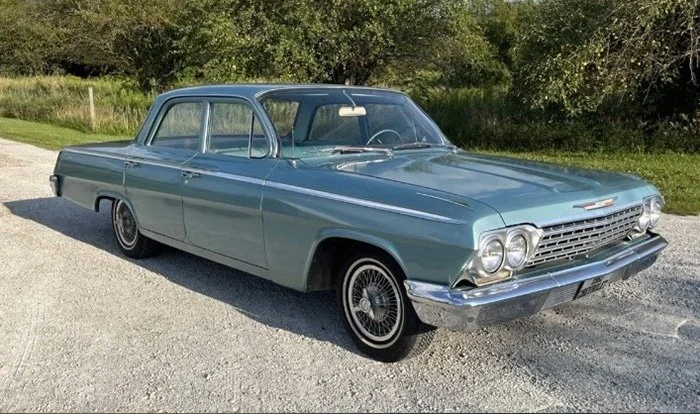
My first home was the western state of Arizona. My original owner was a bit of a flake, but he was proud of his new $3,420 purchase. His nonchalance was costly. When I was but a few months old, I survived a trauma: I was left with my engine running and my “all weather air conditioner” on full blast. Arizona was hotter than a pizza oven. Lo and behold, a Mexican gentleman got behind the wheel and drove me over the border and into a new life!
Initially, my existence was not much different. The new Mexican owner had a large family with lots of muchachos and muchcacas who spilled copious amounts of food on my seats and carpets. I became accustomed to dirt roads and potholes. Things were getting boring and monotonous until one day something new happened. My trunk and back seat were filled with boxes that were sealed and carefully taped up. I did not know what they contained. Two younger fellows took over the front seat, and we drove for several days, heading south. Eventually we ended up in Merida, the most important city in Yucatan, a secondary area of Mexico. Lots of the people there did not even speak Spanish. They spoke their native language, Mayan. After I was unloaded in Merida, I never saw the two fellows who had driven me south again.
My caretaker was an old man. He was cautious, but not a good driver. Fortunately, he seldom ever drove me. In fact, I was stationary for several weeks unattended until one sunny afternoon I heard two men speaking to my caretaker.
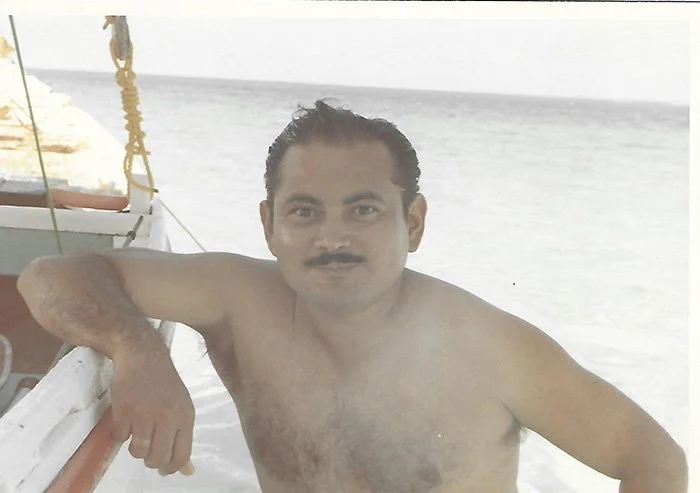
One was a Mexican, a short, rotund happy sort of fellow who did almost all the talking. His name was Luis Medina. The other fellow, about the same age as Medina, was obviously an American--of fair complexion, blond and blue eyed. He was destined to become my owner for many years.
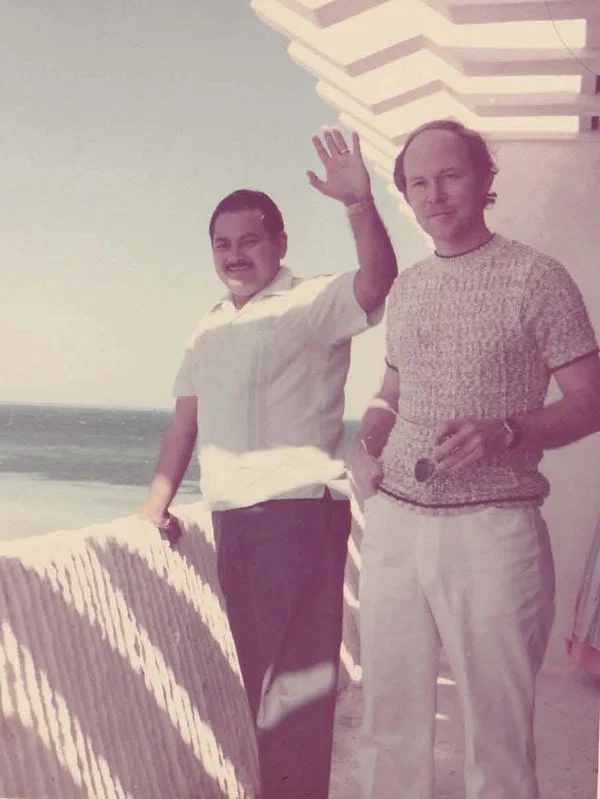
I changed hands for $1,500 cash paid by Jack May. I did not have a “car title” because I had departed the USA quite hastily. This matter seemed of no concern to the new owner.
Soon I was cleaned thoroughly and got a complete wax job, the first in several years. I was shiny! To counter a moldy smell, my seats were carefully cleaned and then covered with new plastic seat covers. A new gadget was added below my dashboard, an Eight Track Player that played music just like a record player except the recordings were on a spool of tape contained in a small box. We were a rolling sound stage . . . and we could and did play loud music. The owner really liked songs by the Beatles.
The business deal between Luis and Jack was that Luis would maintain me, the “Bel Air,” and use me as a taxi. Whatever profit there was would belong to Luis. Jack would have free use of me whenever he or his friends wished. Through the years this would turn out to be a wonderful arrangement for all concerned.
Luis was from Mexico City. His vivacious personality had somehow linked him with the only daughter of the Mayor of Merida. Luis was not of the aristocratic strata of Latino culture, but his infectious personality and innate intelligence carried him far. He was allowed to marry. His connections and his language proficiency stood him in good stead. As well as fluent English, he spoke, of all things, Italian! He became a renowned tour guide, using me, his Bel Air, for small groups. Our profit allowed Luis and Jack to purchase a larger VW van for larger groups.
The adventures the three of us shared over the years are too numerous to relate completely . . . and some are probably too salacious for tender eyes or ears. Jack, an avid spear fisherman, and I frequently made the journey from Merida to Isla Mujeres. Now Isla Mujeres is part of Cancun, a huge development with hundreds of thousands of people and scads of tourists. In the early 1960s, Cancun was not even a town!
We took professors from the University of Florida to do archeological exploration at the Mayan ruins at Chichen Itza. Back then, it was a little-visited place, mostly overgrown by the jungle. On another caper, we took friends to the pyramid and camped out at the base, allowing the children to run up and down the steep pyramid without supervision. Once we took a mariachi band to the Isla to meet up with Jack and some of his fishing pals who had flown in on his private plane.
Musicians were not the only entertainment we transported hither and yon. Jack and a lady friend who played a tambourine in a local band—he called her the “Easy Rider” — were driving through town during the evening. Suddenly we were surrounded by a cheering, colorfully dressed, raucous crowd, pressing on both sides of the car. Our forward motion was stopped. The sky was lit with a gigantic display of fireworks, and somewhere, not too distant, a brass band was blaring discordant tunes. A local festival with a pageant and parade was in progress. We exited and joined in the fun.
Jack was fond of champagne and frequently brought quantities of the bubbly drink with him from America. It was unheard of and unavailable in Yucatan during those times. Once, while driving along the mostly empty two-lane road to Isla (about a three-hour drive) at night, Jack decided to open a bottle of his champagne, so we stopped in the middle of the road. Opening the trunk, he pulled out the French wine and popped the cork. At that moment, from out of the dark surrounding jungle, there appeared a chiclero, a native Mayan who independently collected chicle from wild growing native trees. The chicle is the main ingredient of chewing gum. The chiclero had an antique single-shot rifle, held together with wire. He had a mostly toothless grin, smelled like wood smoke and spoke no Spanish. Jack shook his hand and poured him a plastic cup of Veuve Cliqout French Champagne. He took it eagerly. They raised their cups, smiled and toasted, and he disappeared back into the jungle as silently as he had emerged.
Our adventures continued for nearly two decades. I was getting a bit old, but not rusty or overly dinged. My running parts functioned well, the reward for conscientious maintenance. I managed to bring in countless dollars for Luis and provide wonderful adventures for Jack. Like any old precious possession, I was special.
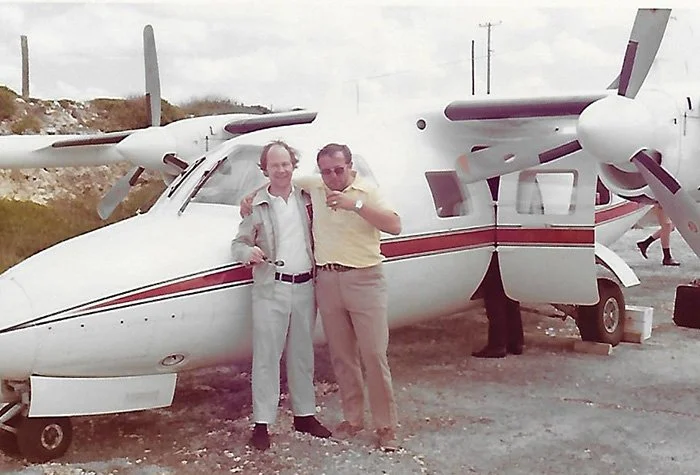
Then, alas, one day Luis did not show up to drive me. I never saw Luis again. Of course, south of the border old cars never die, they just rust away. But I had awhile to go. And Jack, the “Latino in gringo skin,” probably he did not know what happened to Luis. I never saw him again either.
I’ll always remember something he said more than once, “I have spent my life making investments and some have been profitable, but I have never made a more rewarding investment than my Mexican taxi!