
THE IDES OF OCTOBER
Ides is the old Roman designation for the day in the middle of the month. Of special interest, Ides was the time of the month when all debts were settled. Historically, the most famous Ides are those in March because that is the day Julius Caesar was assassinated. In the life of Jackson Campbell May, the Ides of October—the 15th of the month—is of much greater significance. On that Ides in 1998, I was able to sidestep the disaster that befell Caesar but only by the barest margin of extreme good fortune.
Like the great Caesar, I was at that time besieged by an assault from my son Geoffrey. The attack was not physical with a dagger but personal and legal. Like the disaster for Caesar, what happened was unexpected—a total surprise.
Following the birth of my first son Campbell in 1966, I was inspired, partially under delusions of grandeur, to create a family trust to span generations. In this regard, I emulated the estate plans of wealthy families for the last few centuries. My ambitious plan was to amass a large fortune and extend it in perpetuity. Toward this end, I engaged a renowned professor from the College of Law at the University of Florida whose specialty was trust and estate law. Dr. Kenneth Black was the author of several textbooks on the subject. The Jack C. May Trust was a perfect legal document specimen.
Over three decades, with persistence, good fortune and astute management, I was able to build the assets of the Trust to a substantial level. By the late 1990s, the net worth of the Trust was in the lower eight figures, not an inconsiderable treasure. The Trust regularly paid the beneficiaries distributions of the available cash flow. The beneficiaries were my children in 1998—Geoffrey, Winston and Emmalee. The Trust was designed to make equal payments to each beneficiary. The Trustees, who were my friends and experienced professionals, managed the enterprise. They were authorized by the trust document to make exceptions to the payment plan, depending on need and special circumstances.
Geoffrey, the remaining second son from my first marriage, had by this time taken a wife and started a family, which the Trustees took into consideration. They distributed the preponderance of available funds to Geoffrey, including funds for purchasing a large property next to my home, Xanadu, for building a house for his growing family. While Geoffrey had played as a drummer in a rock band and made other efforts at employment, he had failed to gain a meaningful profession. He constantly harangued the Trustees for more money.
In early October of that year, the Trustees and I received notice that Geoffrey wanted a special meeting to review the finances of the Trust. Because the Trustees met periodically and sent regular financial reports to all beneficiaries, the current situation was well known to all, including Geoffrey. The Trust was in excellent financial shape.

That Thursday morning, the Ides of October in 1998, the Trustees Jim Salter and Arch Roberts, George Miller the accountant, and I prepared to meet and review the financial situation. To the great surprise of all, Geoffrey arrived at the meeting accompanied by an attorney.
Immediately when the meeting was called to order, his attorney announced that Geoffrey intended to bring legal action against JCM and the Trustees claiming that monies had been fraudulently taken from the Trust. This astounding and unsubstantiated accusation was met with disbelief. Despite denials from all, the attorney and son stridently insisted that a suit was forthcoming. The meeting was over.
To say I was flabbergasted and overwhelmed by this unjustified assault is an understatement. I broke out in a cold sweat and retreated alone into my office. I was not in the least concerned about the charges because I knew the conduct of the Trust was beyond reproach and an independent audit would prove that. Every single dollar of the funds that the Trust had accumulated was from the sweat of my brow or the genius of my business acumen and from risking my personal capital for the benefit of my family.
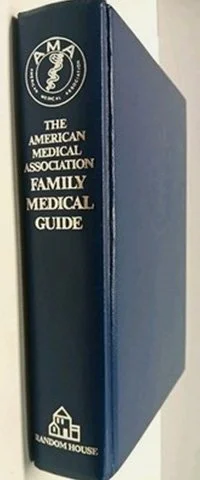
Like Caesar, I was overwhelmed by the chutzpah and disloyalty of my son. My head began to pound, and sharp pains stabbed up the back of my neck. Perspiration soaked my crisp white shirt. I undid my tie. I took three or four aspirins. From our extensive office library, I took down the AMA Family Medical Guide. I found Vascular Disorders, then Subarachnoid Hemorrhage.
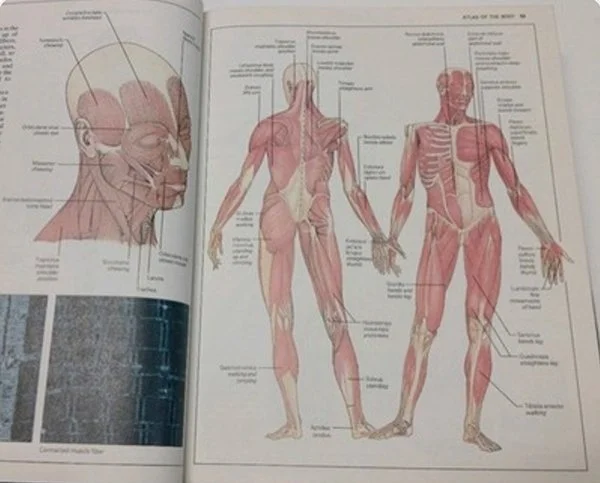
"What are the risks?" My symptoms precisely mirrored those in the book. I was having a stroke. "What should be done . . . call a physician without delay." Sheepishly, I advised my personal assistant Jan that she needed to take me to the hospital. She was aghast, turned pale and led me to her car. In my hand was the AMA medical book, my finger marking the page I had turned to. We drove for what seemed like days to the Emergency Room of North Florida Regional.
Jan checked in at the reception desk, and we were told to take a seat. My head was throbbing, and I was barely awake. Time passed. The pain intensified. No one called for me.
Perchance a friend walking by—a fellow outdoorsman and military academy graduate—recognized me slumped over in a chair sitting next to my gal Jan. Realizing that I was barely conscious, he addressed his question to her, "What's wrong with Jack?" Jan mumbled that my problem was whatever was in the book I was holding . . . something to do with my headache. Dr. Joe Cauthen took the book from my limp hand and saw what I had read. He was a brain surgeon at the hospital. God was watching out for Jack!
Dr. Cauthen went to the desk, called for an ambulance and then called Shands Hospital at the University of Florida for the nurse of Dr. Arthur L. Day. According to Jan, he explained my situation and advised Dr. Day that this was an emergency situation. Dr. Day was one of the nation’s most renown neurosurgeons, specializing in aneurysms, an eminent cerebrovascular surgeon at the University of Florida College of Medicine and Shands Hospital. Fate was on my side!

Into a waiting ambulance, I started the crosstown journey to Shands. I was writhing in pain. A nurse asked if I had ever had morphine. “No, but I always wanted to try it” was my feeble response as he shot me up. There was no immediate effect. In a haze, I was led into a windowless subterranean chamber. Like a hunk of meat into a sausage grinder, I was fed to a monstrous white Magnetic Resonance Imaging (MRI) machine for a photo of the inside of my brain.
My condition of burst blood vessels in the brain was medically called a subarachnoid aneurysm. This disorder differs from a cerebral hemorrhage because the blood escapes over the surface of the brain instead of seeping into the brain tissue.
Dr. Day outlined the options in a clear diagram. Immediate surgery was the only possible solution. I recall mumbling as I was being prepared for surgery. Anything to relieve the pain was welcome as far as I was concerned.
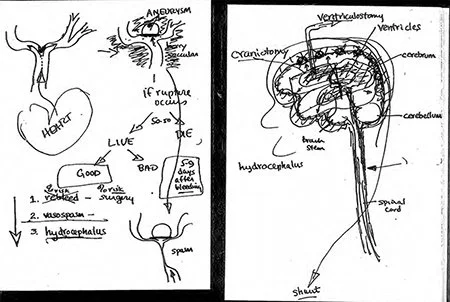
The next three weeks in the hospital were a blur. Initially I was delirious and on intravenous pain killers. I was fed liquid nourishment. Eventually the world came back in focus. One operation opened up my skull, and a second installed a shunt to prevent hydrocephalus. Did the trauma affect my brain, my reflexes or my intelligence? More often than not this situation results in some impairment. The last few days of my confinement included a daily visit from Dr. Day and a series of complete medical exams. To his delight as well as mine, he pronounced me to be fully cured with a remarkable outcome.
Long years later, the lawsuit that was still threatened and pursued by my disinherited former son was concluded. The legal costs exceeded $650,000 with the result that the Trust had to sell most of its holdings to generate the cash during the real estate depression of 2008. The final outcome was the bankruptcy of the Trust and a debt from the Trust to JCM personally of more than $600,000. A small portion was paid; the balance is uncollectible.